How to choose colors for a mandala
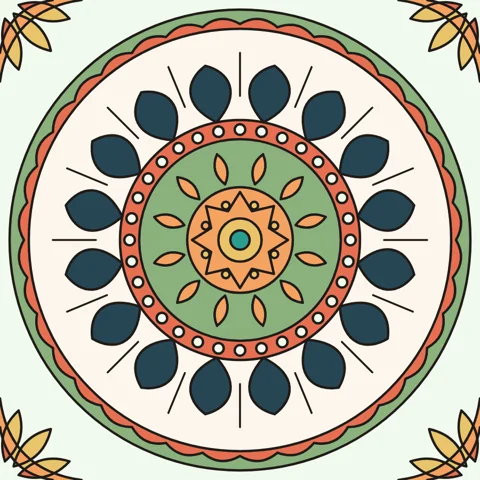
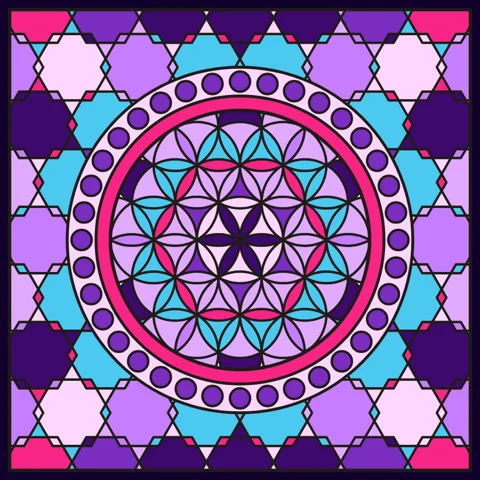
A mandala is built from rings. Each ring repeats the same shape around a center, so a single color decision is copied many times. That is what makes mandalas so satisfying, and also why a careless choice can make the whole picture look noisy. Here is a simple method that works on paper and on screen.
1. Start with three colors, not ten
Pick one main color, one supporting color and one accent. The main color will cover the largest areas, the supporting color will fill the next rings, and the accent will appear only in small shapes such as dots or the very center. Three colors in different strengths already give you many combinations once you add lighter and darker versions of each.
2. Work from the center outward
Color the center first. It is the point the eye returns to, so it deserves your strongest or brightest color. Then move one ring at a time. Finishing a whole ring before moving on keeps the symmetry clean and lets you judge the balance as it grows.
3. Alternate light and dark rings
Neighbouring rings that have the same brightness blur together. If one ring is dark, make the next one lighter. This rhythm of light and dark is what gives a mandala depth, even when you only use a few hues.
4. Keep the background quiet
The background is usually the largest single area. A soft cream, a pale grey or a very dark navy lets the pattern stand out. A saturated background competes with the mandala and makes it look smaller.
5. Repeat the accent, but rarely
Use the accent color in the center and maybe once more in an outer ring. Repeating it two or three times connects the picture; using it everywhere turns it into the main color.
Try it in Boya Bakalım
Boya Bakalım has ready-made harmony palettes such as Sunset, Ocean and Iznik, so you can start with colors that already work together. The Recently used row keeps your chosen three colors close at hand, and the glow and shade fills add a soft gradient to each area. Start with a simple mandala of around twenty areas, then move to the Lotus or Sun Wheel designs when you feel confident.